The Briefing, Vol. XII, Issue 41
This week:
- Trump’s 2024 data still exceed his past campaigns
- Harris has a multi-dimensional Michigan problem
- Vance wins veep debate
President 2024
Hiding Kamala: If you are trying to sell a book, you arrange as many media interviews as possible. The entire point is to get your face, voice, and ideas in front of as many viewers and listeners as possible, since some share of those who hear you will be interested.
The same is true if you are trying to, say, promote a new movie. You want to create some buzz around it, so you get out there and get some extra exposure on any show that will have you.
As you can imagine, this is also the usual strategy when you are running for president. You don’t hide your light under a bushel basket because it doesn’t make sense. The entire point is to get yourself out there, get your name, image, and likeness in front of as many potential consumers or voters as possible. This is what publicity campaigns are all about.
But for Vice President Kamala Harris (D), her unexpected campaign for president has been almost the opposite. It is a paradox and a problem for her that we have pointed out previously.
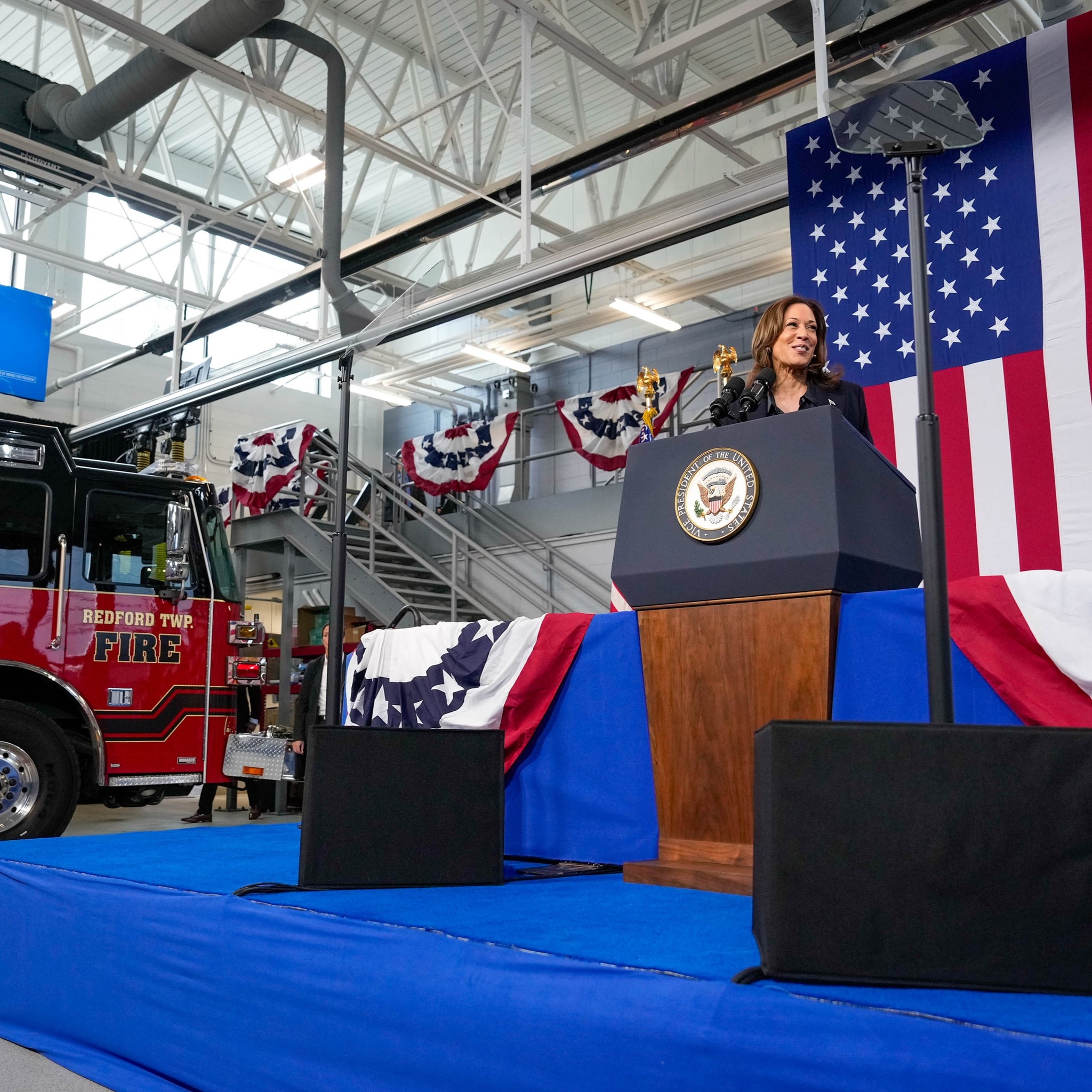
Harris has been hiding from the media almost entirely since her accession to the Democratic nomination three months ago.
Harris has not completely hidden, and not all of her public appearances have been disastrous for her. For example, she rose to the relatively easy challenge of baiting opponent Donald Trump (R) in a debate. But she is terrible at answering substantive questions on her feet, to the point that the listener can be forgiven for thinking she doesn’t understand much of anything. This is why her staff have largely hidden her from journalists. Even the few friendly interviews she has bothered to do went poorly, and that includes even her own staged campaign event with Oprah Winfrey.
Unlike Joe Biden, Harris has neither the excuse of COVID nor the five decades of national exposure that made Biden seem trustworthy enough to win in 2020.
Harris’s team appears to have noticed this might be a problem. This might be why she is suddenly starting to schedule more interviews in the national media. But again, this may not be a viable solution for her. Her performance in these interviews has not been impressive, evincing the fact that they had reason for hiding her.
Trump advantage: The polls continue to suggest a dead-even race, within the margin of error nationally and in every swing state. Yet the Harris campaign has long expressed worries that the polls are concealing a Trump lead, as they significantly undercounted his support in his last two races for the presidency.
The sense that Harris is being artificially boosted may have started showing in some very recent polls of swing states. Trump was an overwhelming underdog in futures markets in both the 2016 and 2020 presidential elections, but he is very slightly favored this time around.
The bottom line is that Trump will win if he overperforms the polling and expectations as he has in the past. But note that that assumes the pollsters haven’t learned from the past or improved their game since 2020.
Michigan: The most telling indicator in the final days will be Pennsylvania, the swing state that will likely determine the entire election. Trump’s emotional and massive, 100,000-person rally in Butler, three months after the first assassination attempt against him, serves as both a sign and a likely generator of momentum for him.
But another state Harris’s campaign worries about is Michigan. It’s not just that Trump has suddenly taken a lead in the most recent polls — including apparently the internal polling of Democratic Senate nominee Elissa Slotkin. It is also the fear that Arab and Muslim voters in Eastern Michigan simply will not turn out for Harris in the numbers she needs.
The main driver of this problem is of course the conflict in the Middle East. On the anniversary of last year’s Oct. 7 attacks, the Biden-Harris administration’s acquiescence to Israel’s robust offensives in both Gaza and Lebanon continues to pose a problem. This explains Harris’s noncommittal answer about Israel as an ally in her recent 60 Minutes interview — the topic is a lose-lose for her.
But that’s not Harris’s only problem in Michigan. The story in Hamtramck, a city within Detroit governed entirely by Muslims, illustrates the issue. The Democratic Yemeni-American Muslim mayor, Amer Ghalib, went so far as to endorse Trump. This occurrence apparently has at its root a political feud between Ghalib, Gov. Gretchen Whitmer (D), and Attorney General Dana Nessel (D) over the flying of gay and transgender flags on city property, something that has been banned under his leadership. Nessel, for her part, has probably made Harris’s problem worse by also antagonizing Rep. Rashida Tlaib (D).
Muslim voters in Michigan probably won’t vote for Trump in large numbers, but they can hand him the victory simply by absenting themselves. The Dearborn-based Uncommitted Movement of Democrats, one of the organizations behind the more than 100,000 “uncommitted” votes in this year’s Democratic primary, has chosen not to endorse Harris.
Veep Debate: Sen. JD Vance (R-Ohio), running mate to former President Donald Trump, doesn’t have horns, it turns out.
Most people have gotten little exposure to Vance outside of the media’s campaign to vilify him, a propaganda effort nearly as embarrassing as the simultaneous effort to turn Harris into a sympathetic figure. But thanks to the direct exposure afforded by a debate, many people suddenly gained a new appreciation for Vance’s intelligence and humanity. Vance is sort of an anti-Harris, in that people will probably like him more (or at least dislike him less) the more they actually hear him speak.
Vice presidential debates don’t really matter. But last week’s event was certainly positive for Trump’s’ ticket, and negative for Harris’s, as Minnesota Gov. Tim Walz (D) was clearly outmatched. To the minimal extent that a vice presidential debate can help, this one did.
Unions: Harris’s political bonafides with organized labor are impeccable, but her support from union members — or lack thereof — seems to keep rearing its head in one way or another. Her struggle for union members’ votes is a clear disadvantage for her compared to Joe Biden, and in a close-run race it could really matter.
After the Teamsters Union declined to endorse, due to its membership overwhelmingly supporting Trump, the International Association of Firefighters did the same.
On the other hand, Harris’s campaign caught a break when the International Longshoremen’s Association agreed to freeze its threatened strike until after the 2024 election. They could have made the Biden-Harris economy scream at the very moment of the election.
The union’s demands for almost double pay and zero automation at ports probably only demonstrates that those ports need to be automated as soon as possible, so that a small group of entitled workers can’t hold the entire country’s economy hostage. But it had to be taken seriously in an election year.
They/Them: Culture war issues are playing a significant role in this year’s election. Over the weekend, Trump’s campaign blanketed the airwaves during NFL games with its ad about Harris supporting taxpayer-funded gender transitions for prisoners, including a specific (white) convicted murderer. This well-targeted message — “Kamala is for they/them, President Trump is for you” — is an obvious attempt to draw male voters, especially black and Hispanic men, toward Trump, or at least to discourage them from voting for Harris.
Senate 2024
Pennsylvania: Trump’s visit here over the weekend isn’t going to hurt Dave McCormick (R), whose race against incumbent Sen. Bob Casey (D) appears to be only a two– to four-point affair at this stage.
Texas: At the same time, Sen. Ted Cruz (R) has an uncomfortably close race on his hands, leading by just three points in the latest survey.