The Briefing, Vol. XII, Issue 5
This week:
- Haley persists, but Trump has the race wrapped up
- Bit by bit, Trump is getting closer to pushing his trials past the election
- Democrats try to help Rosendale, but Sheehy leads in Montana
President 2024
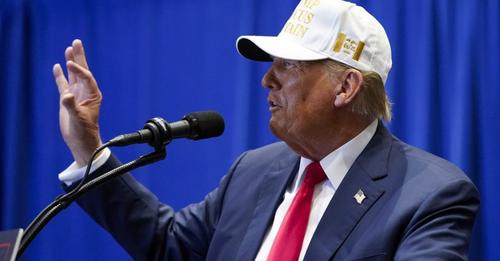
RNC: Although Republican Party officials offered, former President Trump refused their offer to make him their “presumptive” nominee. That doesn’t change the facts, however.
Trump has — contrary to his typical character — stated that he has to win GOP support the old-fashioned way, at the ballot box. At the same time, in a less magnanimous but more characteristic fashion, he has promised to “get even” with Nikki Haley for continuing in the race. But the truth is that none of this matters. Trump dominates the allegiance of Republican primary voters and caucus-goers. All signs point to Haley suffering another large defeat in her home state in the February 24 primary. At this point, the Republican nominating contest is over in all but name.
Court dates: For Republicans, strictly from a perspective of winning or losing this year’s election, the biggest drawback of renominating Trump is the fact that he faces multiple criminal indictments.
GOP voters, and about half of the country, according to most polls, have evidently decided that the cases against him are politically motivated. But there remains a danger, because one can never guess just how the voting public would react to a conviction in any or all of the cases.
Yet with the case against him in Georgia falling apart due to credible corruption allegations against the district attorney who brought it, and potential new delays in the federal cases against him, the once-slim odds that Trump’s trials will be delayed until after the 2024 election continue to improve.
This outcome is still unlikely. But with Trump’s immunity argument pending before a panel of the D.C. Circuit Court of Appeals, and the Supreme Court almost certain to take up the issue after its ruling (expected any day) comes down, it appears impossible that most or even any of the cases against him will reach a courtroom this spring. That timeline could extend into late summer, at which point an entirely new set of objections could be raised over the political interference inherent in holding such an unprecedented trial at the height of the presidential election cycle.
Senate 2024
Arizona: State GOP chairman Jeff DeWit was forced to resign after the release of audio from about ten months ago. The audio of the conversation, which he claimed had been misleadingly edited, made it appear that he had attempted to induce 2022 gubernatorial loser Kari Lake (R) to drop out of her race for U.S. Senate with what sounds like either an offer of money, a lucrative job, or a fat bankroll for a future gubernatorial election.
The state party has already moved on and selected a new chairwoman, but the controversy is likely to leave a mark. Arizona will be a vital state for Republicans as they attempt to build a Senate majority, but it will also be essential for the presidency. Donald Trump nearly lost Arizona in 2016 and lost it in 2020.
Lake faces, among others, Pinal County Sheriff Mark Lamb (R) in the primary, but so far what little polling there is (from all the way back in October) suggests she is a prohibitive favorite for the nomination. Frankly, this controversy over DeWit has only helped her in this regard.
In the general election, a very competitive three-way race is expected against incumbent Sen. Kyrsten Sinema (I) and Rep. Ruben Gallego (D).
Speaking of Gallego, the Washington Free Beacon filed recently to have a court unseal Gallego’s divorce record, which was sealed in its entirety — typical in some states, but apparently unusual in Arizona. Gallego’s wife, the current Democratic mayor of Phoenix, was nine months’ pregnant at the time of the divorce, and Gallego has admitted on the record to excessive drinking and “extreme outbursts” at the time it happened.
Montana: Both the Trump campaign and establishment Republicans in Washington are likely pleased about a new poll showing political newcomer, businessman, and retired Navy SEAL Tim Sheehy leading Rep. Matt Rosendale (R) in a Republican primary race for U.S. Senate by a wide margin, 48 to 24 percent. Rosendale has not yet officially entered this race, and Republican regulars would prefer to keep him out. Trump dislikes Rosendale as well due to his involvement with the conservative Club for Growth, a group that has frequently found itself at cross-purposes with Trump and his endorsements.
Sheehy’s apparent lead, which upends some earlier perspectives on this race, confirms trends in polling that we previously observed. It tracks well with the support that Sheehy has received from Montana’s senior senator, NRSC Chairman Steve Daines (R-Mont.), whom Rosendale has accused of trying to “bribe” him like in Lake’s case, although it sounds more like he threatened to cut off his sources of political fundraising.
Democrats, meanwhile, have made very clear whom they prefer to face. They are meddling in the Republican primary and intervening on Rosendale’s behalf, using a shady, newly-formed organization called Last Best Place PAC and $6 million in dark money. This is an election interference playbook that Democrats have used in the past, both in Montana and elsewhere, to choose the Republican nominee.
Republicans are dead-set on defeating Sen. Jon Tester (D), to whom Rosendale lost in 2018. This will be a much harder year for Tester because Trump is certain to win the state by a very wide margin. If a Republican wins this year, it would give a thoroughly Republican state two Republican senators for the first time in more than a century.
The primary is June 4.
House 2024
New York-3: The expulsion of former Rep. George Santos (R-N.Y.) from the U.S. House already left Republicans shorthanded in their majority. But the Feb. 13 special election could make it permanent, at least for this Congress.
Former Rep. Tom Suozzi (D) is back, looking to reclaim his seat after Santos’s Icarian career, but he faces headwinds. His opponent, Nassau County legislator Mazi Pilip (R), is making good use of the Democrat-created migrant crisis in New York City, controversially and amusingly calling Suozzi the “godfather of the border crisis.” For his part, Suozzi has tried to distance himself from Biden on this issue. Expect to see a lot of this from Democrats this year.
As much as Republicans may be perceived from the outside as having given up on Long Island and suburban New York, this is a misleading perception. They have enjoyed a revival of sorts amid New York City’s decline, since their suburban collapse in the late 1990s, with strong election performances in 2022 and in the local 2021 and 2023 elections.
The special election is February 13.