The Briefing, Vol. XII, Issue 42
This week:
- Harris flubs the most devastating question of 2024
- Trump catches up in key national poll
- Senate picture brightens for Republicans
President 2024
Although the polls remain as close as ever, there is a palpable sense of panic in the campaign of Vice President Kamala Harris. Its last-minute change of campaign strategy, designed to put their candidate in as many sympathetic interviews as possible instead of hiding her from voters, has backfired — perhaps in the most unlikely way.
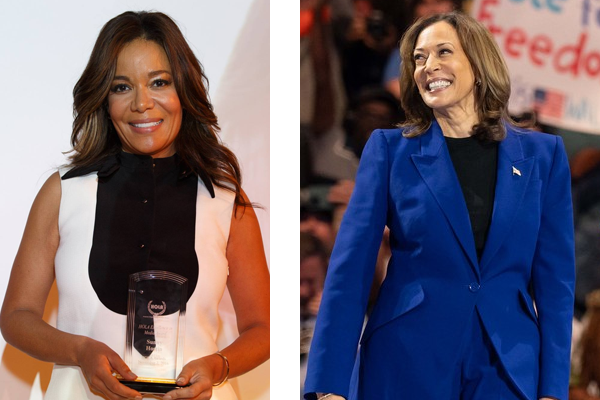
Who could have ever believed that Sunny Hostin, one of the most craven Democratic Party toadies in the entire television world, would be the one to put the knife into Harris’s back?
The question Hostin asked (later repeated by Stephen Colbert) might have been given to her by some saboteur, it was so devastating in its effect. She seemed to be reading it off a card: “If anything, would you have done something differently than President Biden during the past four years?”
Harris, as usual unprepared for what should have been an obvious question, offered this answer: ““There is not a thing that comes to mind in terms of — and I’ve been a part of most of the decisions that have had impact.”
It was actually quite a bit worse than that. Harris tried to avoid answering the first version of this question, but Hostin somehow decided to follow up rather than let her off the hook.
In the end, this might turn out to be the only question that ever had to be asked in the 2024 election.
People hate the Biden administration. Think back to 8 pm Eastern Daylight Time on June 27, minutes before the fateful debate began that would force Joe Biden to quit the race. At that moment, Donald Trump was already a 61 percent favorite to win the election, as the chart at the bottom of that page shows. Joe Biden was getting three-to-one odds — and again, this was before the debate even began.
We had by that time been pointing out here since April that the Electoral College math was just not working out for Biden, and that Trump had become the overwhelming favorite.
Biden’s poor debate performance that night was not so much a revelation to anyone as it was a welcome excuse for Democrats to dump a clearly losing candidate. Polls showed then and still show now that American voters hate Biden’s policies on nearly everything — particularly immigration, crime, and the economy, which are three of the top issues in the country right now.
Harris, however, finds herself in a situation where she can neither credibly distance herself from nor criticize the administration she has been so eager to associate with by name — and yes, you heard that phrase “Biden-Harris administration” many, many times before this election season. (How many times did you hear about the “Obama-Biden” administration or the “Trump-Pence” administration during those presidential terms?) This isn’t about Harris being loyal, but about how little credibility she can muster criticizing her own administration’s policies. She can’t exactly go around saying “We can’t afford four more years of this.”
Polling: Harris’s situation is so difficult that it is actually generating news stories about her campaign. And ”Harris weighing where to put more distance between her and Biden” is not the kind of story you want running three weeks before a close presidential election.
For all the relief Democrats felt upon tossing Biden into the ash-heap of history, they may live to regret the decision, as we predicted at the time. There were reasons Harris did so poorly when she ran for president in 2020.
This past weekend, NBC News released its latest poll, showing that Harris’s five-point national popular vote lead from September has vanished, with Trump now tying her at 48 percent among registered voters. (Polls of “likely voters” tend to show better results for Republicans historically speaking, but it is unclear whether this trend will continue in 2024. In any event, NBC News provides no breakdown for likely voters.)
A Trump near-tie or victory in the national popular vote (something Trump has never achieved in either of his presidential runs) would essentially guarantee him an Electoral College victory.
The new NBC News poll is quite telling. Harris’s biggest problem is the Biden administration and the current state of the country. Sixty-four percent of Americans believe the country is on the “wrong track.” Biden’s net approval rating stands at minus-11 points, which is actually not quite as bad as the minus-18 that it was in July. Trump, whose approval numbers are usually terrible, is only at minus-3 points in the new poll — significantly better than his minus-9 rating in July.
Meanwhile, Trump has overwhelming advantages on the issues of Israel (18 points), immigration (15 points) and “inflation and hte cost of living (11 points).
So again, it is Biden administration policy that is weighing Harris down. Indeed, one could say that in comparison, Hillary Clinton had a much more favorable environment in which to run against Trump in 2016. The level of widespread discontent with her party and the sitting Democratic president at that time was nothing compared to what it is now.
Also noteworthy: Those polled voted for Biden in 2020 by a four-point margin, almost the exact national popular vote result that year.
Harris top issues: It’s not all bad news for Harris. The NBC poll also shows that Harris has a big lead on the issue of abortion (a 19-point advantage) and a small advantage on appointing Supreme Court justices (five points). She has only narrow advantages (three to five points) on less substantive questions about who “represents change,” is “competent and effective,” and “sharing your positions.” Oddly, Biden had similar advantages on some of those questions before he dropped out, including the one about “change,” despite being the incumbent. Trump, however, was viewed as more competent than Biden (by 18 points), making this the biggest area where Harris has improved the Democratic ticket.
For what it’s worth, this poll serves as confirmation of Trump’s strategy of downplaying abortion as a national issue and focusing instead on crime, the economy, and immigration.
Voters narrowly cited abortion as their top issue (22 percent), followed closely by immigration (19 percent), “protecting democracy or constitutional rights” (18 percent), “the cost of living” (16 percent), and “Israel’s military conflict against Hamas and Hezbollah” (9 percent).
Electoral Map: As the election draws near, we are trying to color in more of the map, but three of these states given to Trump are actually quite close:

At this point, Trump is slightly favored in the contested Sun Belt states of Georgia, North Carolina, and Arizona. If he carries those, then Harris has to win all three of the so-called “Blue Wall” states — Wisconsin, Michigan, and Pennsylvania. The polls of those three states are mixed at the moment, although Trump seems slightly better situated in all three. In his appearance in Michigan over the weekend, Trump pressed his advantage on the issue of electric vehicle mandates and incentives, which nearly two-thirds of voters there oppose.
Senate 2024
Nebraska: Sen. Deb Fischer (R) has produced an internal poll suggesting that she is not in fact hopeless in her re-election race against independent liberal candidate Dan Osborn (who bears no relation to the former Nebraska football coach and congressman Tom Osborne).
Osborn, as Sen. Pete Ricketts (R) put it in a recent radio interview, is an experiment for Democrats in running independent candidates in order to overcome the overwhelming toxicity of their party’s brand in states like Nebraska. Something similar was tried in Kansas in 2014. It is entirely possible that there will be more faux-independent candidates like Osborn in the future in the deepest Red states.
Ohio: Nearly every poll shows this race to be extremely close and winnable for challenger Bernie Moreno (R) against Sen. Sherrod Brown (D). With Trump a near-certain winner in Ohio, and perhaps by double digits, Moreno’s chances are considered almost a coin-flip.
The last-minute surge of resources here is already underway. If Republicans flip this seat, they are basically guaranteed a Senate majority, given the likelihood of takeovers in Montana and West Virginia.