The Briefing, Vol. XII, Issue 47
Nov. 18, 2024
This week:
- Donald Trump’s win repudiates not just media bias but the entire media paradigm
- Voters saw through the mainstream propaganda as Trump reached them elsewhere
- The cable-news model of politics is outdated, and so was Kamala Harris’s campaign
Outlook
With a couple of results pending recount or a final count, we will spend this week looking at one of the long-term political trends that the 2024 election brought to the surface.
In election 2024, Donald Trump proved not only that the mainstream media in America are broken, but also that the political culture they helped create is disintegrating in favor of something more substantive and interesting.
Repudiation of mainstream media: There are two senses in which Trump’s re-election victory signifies a massive repudiation of the American media as we know it.
The one sense is obvious: The media shamelessly hyped Kamala Harris after her (in retrospect) weird and meritless rise to the top. They tried to convince the public that an extremely unpopular and untalented politician, whose numbers had often been worse than Biden’s own, was the next Barack Obama, and it just didn’t work.
When propaganda fails to convince, it is a sign that you’re not doing it right — a fortiori, given that Harris burned through $1.5 billion in donors’ money over the course of just 15 weeks and (like Hillary Clinton before her) outspent Trump nearly three-to-one.
This offers a clearer picture of what really happened in July, when the media was trying to convince everyone that Harris was going to be such a great candidate. What happened was that the Democratic donor class got extremely excited about Harris. The voter base? Not so much. (To add insult to injury, those on her campaign’s e-mail list are still receiving multiple daily solicitations for donations.)
Fake news: Voters not only rejected the media’s preferred candidate, but they also rejected nearly all of its major narratives about the election. For example, they saw through all four prosecutions of Trump as illegitimate and political. They saw through the bogus fraud case brought by New York Atttorney General Letitia James (D), which will likely be overturned before Christmas. They saw through the civil verdict against Trump for an alleged decades-old sexual assault — a case that was literally cooked up at an anti-Trump journalist’s Manhattan cocktail party.
Voters also rejected the veracity of the media’s day-to-day coverage. They saw through the notion that Trump and his movement were racist or sexist — and no one saw through it more than Hispanic and Black men. Even women went for Trump in higher numbers than they had in 2020.
The only group that moved further Democratic was white voters with college degrees — in other words, the “luxury beliefs” class. Everyone else saw through the media’s lusty embrace of Democrats’ self-serving claims that Trump was a fascistic, Hitlerian threat to democracy.
Voters also rejected many of the bogus storylines the media had trumpeted throughout the campaign — for example, that Trump had promised a literal bloodbath, that he had said he would send the army after critics, that he had called white supremacists “very fine people,” that he would be “a dictator on day one,” and so, so many others. These false stories helped dismantle the media’s credibility.
This, on its own, has to be gratifying for conservatives, who have watched the media spew lies day after day for years, invariably running interference for democrats, invariably smearing Republicans or bringing the most tendentious and bad-faith charges against them.
Newsman Bernard Goldberg memorably pointed out the ubiquitous bias in his bestselling book by that name more than two decades ago, but he probably understated the case. Podcaster Michael Malice has more acutely observed that the American news media are not just allies of the Democratic Party — rather, the Democratic Party is the political wing of the nation’s media-entertainmment complex, representing its values, principles, and interests against those of ordinary middle-class and increasingly working-class Americans.
This election was the full vindication of Malice’s view, as the public decisively rejected the media industry’s preferences in favor of someone previously considered to be far too icky, uncool, and out-of-bounds to support publicly.
Indeed, these last two weekends, the sports world has begun to provide an alternative entertainment venue for pushback against the political media, as college and NFL football players alike have been repeatedly seen doing the “Trump dance” after touchdowns. Like the old chants of “Let’s go Brandon!” this is as much a dig at the media and entertainment elites as it is an endorsement of Trump.
Death of the cable news model: Anyone who has been around since the Reagan era or has read Goldberg’s book realizes how massive that vindication is on its own. Yet there is an even more important (and related) sense in which this election repudiated the mainstream media.
To explain, let us take a step back and take a surface-level look at how cable news shaped America’s political journalism and the art of politicking itself over the last 35 years.
In the late 1980s and early 1990s, cable news broke out into the mainstream. Its non-stop news format was something completely new, and it changed the way Americans viewed their politics — as well as the way politicians conducted themselves — forever.
The nature of the 24-hour news cycle was such that it encouraged a very specific set of best-practices, with which most consumers of cable news are by now familiar. Both parties adapted to cable’s short interview format by sending all of their allies into battle with a set of talking-points, with strict orders to maintain message discipline, often even at the expense of evading uncomfortable questions. They thus sought to flood the networks with their propaganda in the short interviews that cable news eventually turned into the industry standard for both cable and broadcast.
The Clinton campaign in 1992 was the first to hone its practice successfully and adapt to this new era. Republicans caught up within a couple of years.
Here’s a contemporary example of this strategy in action: On election night earlier this month, multiple Democratic pundits spontaneously chose the word “flawless” to describe Kamala Harris’s (not at all flawless) campaign as the fact of her decisive defeat became more and more obvious. This happens all the time. And the fact that they all use the same language is never a coincidence.
This modern cable-news-enabled model of propaganda provided the public with a lot of clarity about party messaging, but it provided very little substance and less understanding of what was really at stake than one might have hoped. To be “on-message” was to win. To wander from the message, even in the service of saying something more substantive, constituted a “gaffe,” which the media could turn into a negative process story about you and your campaign.
The above is a very incomplete explanation, but it will serve our purposes here. Cable news, with the incentives it created for journalists and politicians, turned American public life into an extremely superficial and soundbite-driven sport whose best practices everyone understood.
Trump killed the cable news star: So, what happened to this model in 2024? Trump buried it — that’s what. As of today, this model is a dinosaur — dead, buried, and fossilized. The plunging ratings and impending layoffs announced at CNN and MSNBC are just one sign of this. All of the television news operations — including FOX News, which is not suffering right now — are going to have to adapt or die.
To be slightly more accurate, Trump’s 2024 campaign did not so much kill cable news as prove that it was already outmoded.
The first important observation here is that Trump’s campaign was innovative, whereas Harris’s was antiquated — backward, even. But it wasn’t just a problem of strategy. It was also the fact that Trump is a different kind of candidate, and Harris isn’t quite up to scratch even on the conventional scale.
Trump’s team realized it could bypass and largely ignore the national news media and its conventions and reach far larger, more sympathetic audiences of disengaged voters (especially men) in two ways. One was with visual campaign stunts such as the “garbage truck interview” and the day working at McDonald’s. The other was by appearing on long-form podcasts, whose popularity had skyrocketed during COVID.
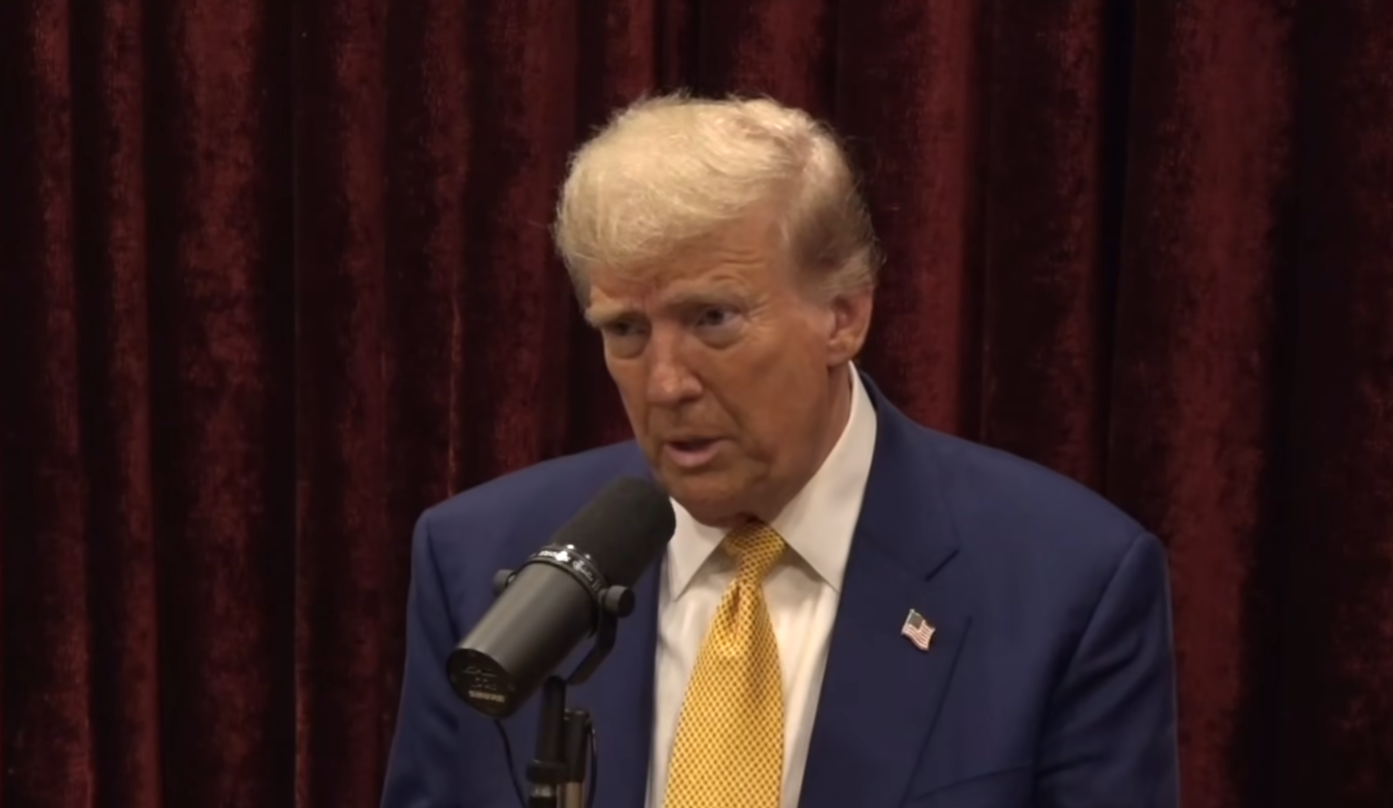
Consider that Trump’s three-hour interview with Joe Rogan has been viewed 50 million times just on YouTube — plus surely tens of millions or even a 100 million more on Spotify, Apple, and YT Music. That is 100 to 200 times the reach of CNN or MSNBC. And again, the audience is a better fit for potentially persuadable Trump voters. The same could be said of his interview with Theo Von (15 million views just on YouTube), and others, not to mention the many podcast interviews JD Vance did.
This strategy was not without its potential drawbacks. There is always a risk involved in doing such interviews, at least if you go by the conventional cable-news driven model of politics. The chances your candidate will say something “off-message” in a no-holds-barred two- or three-hour interview approaches 100 percent. This is especially true for Trump, whose message discipline has always been nearly zero.
Yet this also meant that Trump had very little to lose by taking the plunge. So, at the urging of his youngest son, he went on several of these “bro podcasts” and just acted like himself. It was a stroke of genius. It humanized him for massive audiences in a way that neither crowded campaign rallies nor even positive news coverage (which Trump rarely got) ever could. It showed how authentic he was.
The discussion between Trump and Von about what it’s like to use cocaine, or between Trump and Rogan about boxers, or between Vance and Von about how to spot a lobbyist by his clothes, were completely off-message. By the old cable news era standard, they would be disastrous, leading to all kinds of stories about gaffes and uncomfortable soundbites. The candidates weren’t on-message!
They weren’t and it didn’t matter.
Trump campaign’s podcast- and social media-focused strategy was wildly successful not only for winning the election and the popular vote, but for making something as uncool as “MAGA” into something actually really cool with younger voters.
This is why, despite uniformly negative media coverage for Trump and almost universally positive coverage for Harris, Trump and Vance saw their favorable ratings surge into positive territory for the first time in this election cycle just before Nov. 5.
Harris’s outdated campaign: Contrast this with the wreck that was the Harris-Tim Walz campaign.
Harris was a poor candidate, even on the standards of the dying cable news model. Her staff had to hide her from all non-scripted public interactions for more than a month after she had swindled Joe Biden out of the nomination. But that’s okay — they had a lot of hype on their side, right? Well, it turned out there was too much time on the clock to just run it out.
Although she ultimately did some interviews and a couple of much smaller podcasts closer to the election, Harris was simply too inauthentic to do these well. This was true even when the interviewers were extremely sympathetic. With short-form national news anchors, who were mostly satisfied to let her lean on her talking points (Brett Baier was an exception), Harris harmed herself every time she went on. And this was true even with her own campaign-paid interview with Oprah Winfrey and her friendly interview with Sonny Hostin on “The View.” She was unprepared for obvious questions, such as what she would do differently from Biden. She repeatedly resorted to inauthentic memorized phrases (from “I was born in a middle class family” to the question-begging “my values haven’t changed”) when she found herself out of her depth.
Perhaps most of all, no one on Harris’s staff loved her enough to force her to sit down for 60 minutes and cook up a convincing explanation for why she had renounced almost every ultra-woke policy position she had adopted while running for president in 2019.
So in the end, Trump’s strategy probably couldn’t have worked for Harris anyway. She could never have survived sitting down with Rogan on his set for three hours for a real, wide-ranging, uncontrolled conversation, the way Trump did. There just isn’t enough substance there for such a conversation.
It’s not that Harris didn’t have a modern, media-savvy campaign staff. In fact, in order to make up for her shortcomings, her social media operation generated an elaborate a smoke-and-mirrors operation. Huge teams of online volunteers manipulated various social media platforms — gaming algorithms to make the hype seem real and (for example) making sure any false claims by Harris or her campaign would not be visibly fact-checked with community notes on X.
You can understand how an operation so tightly focused on controlling the campaign message and access to the candidate would view the big podcasts as too risky. They considered letting Harris go on Rogan and Von, but only for shorter interviews, and apparently only if they could have a final edit of the interview, which neither was agreed to.
As for Walz, they made no use of him at all in this area or anywhere else where he might say something unscripted. They were seemingly afraid that he would say something that didn’t match Harris’s current story about what she believes in.
What some have dubbed the “Podcast Election” may have set a new standard for the future. Unlike Harris, future candidates will have to be substantive people capable of carrying on long-form conversations and addressing voters’ real concerns. We could soon see a very different world from the one in which talking heads shout at each other in five-minute segments.
North Carolina Supreme Court: As we will address next week, an impressive 61 percent of first-time voters in the Tar Heel State went for Trump, according to the exit polls. This is the result of the turnout operation we had previously mentioned before Election Day, which we will discuss at greater length next week.
But in the meantime, if you are not sure whether your vote matters, consider that only a couple of dozen votes currently separate Jefferson Griffin (R) from longtime leftist activist and incumbent Justice Allison Riggs (D) for North Carolina Supreme Court.
If Griffin pulls this one off, North Carolina will have a 6-1 Republican Supreme Court, meaning absolutely no more meddling by partisan Democratic justices in the state’s redistricting process for years to come. But this race is obviously way too close to call.
Pennsylvania-Senate: Despite the legal wrangling, the counting of unauthorized ballots, and the certainty that a recount will occur, there does not appear to be any mathematical path for Sen. Bob Casey, Jr. (D) to overcome Republican challenger Dave McCormick’s lead, which is greater than 17,000. McCormick’s victory has now been acknowledged by all the news organizations, but Casey will likely wait to concede (if he even does) until after the recount.