The Briefing, Vol. XII, Issue 22
This week:
- Biden still trailing across the board
- A Trump conviction in New York may not matter
- Libertarians’ left-turn will help Trump at the margins
President 2024
Cooked? It is important to point out that polls can be wrong, and at times they contradict each other. However, a new series of polls commissioned by the Cook Political Report in multiple states, released last week, points to the same results we have been discussing and pointing to for several weeks now.
According to these new polls, when third-party candidates are included in a realistic ballot scenario, former President Donald Trump (R) leads President Joe Biden (D) by eight points in Nevada and North Carolina, by four points in Arizona and Georgia, and by three points in Pennsylvania and Michigan. The two are tied in Wisconsin — again, according to this particular poll, whose results are broadly consistent with many others.
Although the results vary among the many polls in key states, they consistently point to a lead by Trump in North Carolina, Georgia, Arizona, and Nevada. As we have pointed out previously, these states on their own, plus the states he is expected to win easily, are enough to propel Trump to 268 Electoral Votes, leaving him just one electoral vote short. If Trump wins any of the remaining “swing states” — Michigan, Pennsylvania, Wisconsin, New Hampshire (where Biden leads narrowly), or Maine, or even just the second congressional district of Nebraska — then he will be inaugurated president again in January 2025.
Minnesota Poll: In addition to the states noted above, Trump has another path to the presidency that runs through Minnesota, the state that has gone longest without casting its Electoral Votes for a Republican. In that state, the only published poll this year suggests that Biden leads, albeit narrowly enough that this state will be competitive this fall.
However, there is an interesting result from this Minnesota poll that deserves attention this week, as a jury prepares to render a criminal verdict in the trial over Trump’s bookkeeping acumen.
The most recent poll in Minnesota, by Survey USA, shows Biden with a two-point lead. But when asked whether they would change their vote based on Trump being convicted of the charges laid against him in New York City by prosecutor Alvin Bragg, exactly zero of these Minnesota respondents already backing Trump said they would change their votes to Biden.
Five percent of the Trump voters (that is, about 2 percent of voters overall) said they would vote for someone else but not for Biden.
In other words, a guilty verdict would have a negligible effect. In contrast, we believe that a hung jury or a “not guilty” verdict — both of which appear more likely given the evidence presented at trial — will dramatically empower Trump to campaign as the victim of vindictive Democratic prosecutors and allies of Biden.
This is a narrower confirmation of Trump’s general good performance in the polls in various swing states. Trump’s lead in most public polls generally proves that Democrats have lost the battle for public opinion regarding their lawfare prosecutions against Trump. If American voters were generally taking these seriously — and that includes the prosecutions in Georgia, Florida, Washington D.C., and Manhattan — they would not be telling pollsters they intend to vote for Trump in the first place.
Which is to say that most Americans know about these charges against Trump, but view the various prosecutions of him as an illegitimate and anti-democratic attempt by one political party to jail its opponents and limit voters’ choices.
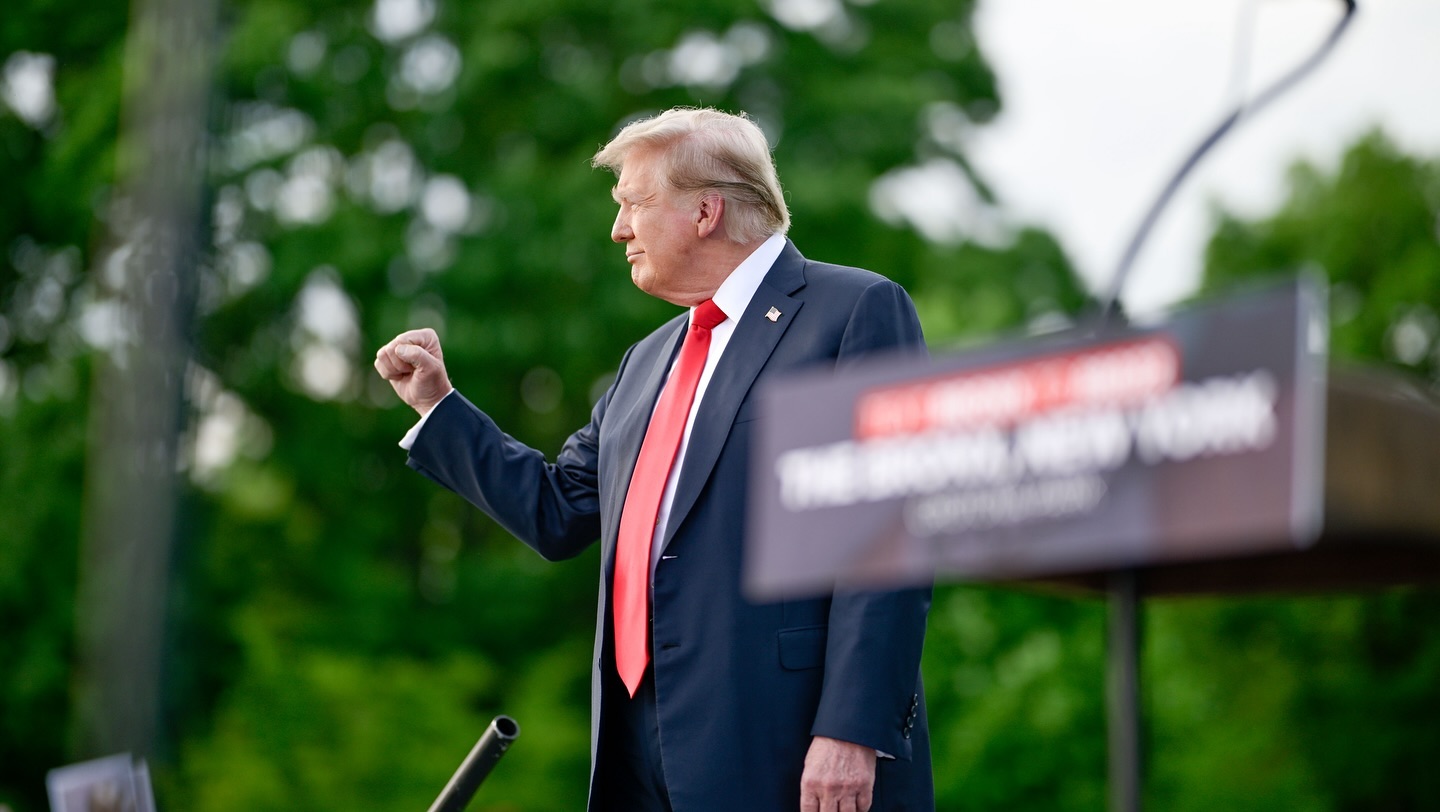
Thus, rather than stealing Trump’s thunder or taking away his “juice,” the criminal prosecutions seem to have energized his campaign and forced his staff to think outside the box about ways to win earned media and improve his public image. Hence the recent rallies in Wildwood, N.J. and even the Bronx.
Perhaps in part because his trial has tied him down geographically, Trump is doing something that many Republican campaigners have been begging Republican candidates to do for decades now — going out and trying to win the votes of base Democratic voters in very Democratic areas, especially racial and ethnic minorities, rather than focusing solely on base turnout. And by holding these rallies, even if Trump never wins these areas, he is already winning positive attention.
Libertarian National Convention: This week brought on another development that helps Trump at the margins. The decision by Libertarians to nominate a leftist for president — Chase Oliver (L), a gay supporter of gender-transitioning children, mask mandates, and vaccine mandates — is a win for Trump.
The effects may be modest, but this means that, to whatever extent third-party candidates on the ballot “take votes away” from the either two major party candidates, none will be taking away more votes away from Trump than from Biden.
The idea that large numbers of people who make the effort to go out and then vote third-party would have voted for anyone else anyway is already questionable. Usually, the alternative is to stay home. Things may be slightly different with independent candidate Robert F. Kennedy, Jr., who at least offers frustrated Democrats an alternative to Biden and a protest vote.
But a more serious Libertarian Party nominee could have potentially cost Trump a few thousand votes in states where the Libertarian Party has a strong base — crucially, in Georgia, where Oliver ran for Senate in 2022 and where the Libertarian Party has long been a serious political force.
In short, this means there will be no noteworthy competition for the presidential vote on the Right,
Kamala Harris has a Plan B: Presumptive Vice Presidential nominee Kamala Harris (D) has reportedly “joked to friends” that she will be running for California governor if Biden loses. Her staff’s denial that it happened is about as credible as Michael Cohen on the witness stand.
This is just another indication (an idle oneat this point) that Democrats perceive the grave peril of their situation.
Governor 2024
Washington: Former King County Sheriff and U.S. Rep. Dave Reichert (R) begins, to no one’s surprise, as an underdog in what is likely to become a contest between him and Attorney General Bob Ferguson (D). This is according to a poll of 615 likely voters by a left-wing organization, which found Ferguson leading, 46 to 42 percent. The same poll had showed Reichert with a slight lead six months ago.
West Virginia: With Attorney General Patrick Morrisey having clinched the Republican nomination for governor last week, Democrats are now trying to float the idea of having retiring Sen. Joe Manchin (D) come back to West Virginia and replace their hopeless gubernatorial nominee, Huntington Mayor Steve Williams. It is a longshot that would be unlikely to succeed even if it were tried.
Senate 2024
Michigan: Rep. Elissa Slotkin (D) polls in the low 40s and faces a close race against any of the Republicans on offer, but she does lead each one. Former House Intelligence Chairman Mike Rogers (R), who won the coveted Trump endorsement and is most likely to take the nomination, is closest behind her at 40 to 37 percent.