The Briefing, Vol. XII, Issue 17
This week:
- As the first trial looms, lawfare campaign still not moving the needle against Trump
- In Florida, abortion still ranks low as a voter priority
- Rick Scott polls strongly to retain his seat in Florida
Outlook
Foreign aid vote: Regardless of the policy outcome, how will the House’s vote over the weekend affect the election generally? The answer is, probably not much at all.
A failure to pass any bill to aid Ukraine, Israel, or Taiwan would have probably shaken things up. The vote on Saturday merely reinforces the status quo.
The effective support of Speaker Mike Johnson by Donald Trump, who suggested a method of aiding Ukraine with loans that he could support, shields Johnson from a second House coup attempt. The would-be plotters (and perhaps they are still plotting) are some of Trump’s biggest supporters in the House.
In a couple of ways, this vote helps Trump avoid any new political problems. Ukraine has just bought itself another year. The more progress it can make in stopping or pushing back Russia, and the more progress NATO makes toward having European countries shoulder more of the burden of defending Ukraine, the less of an issue Ukraine will be in the U.S. election generally.
Given his evident lead over an unpopular incumbent, the last thing Trump needs right now is a massive shake-up of the issues driving the 2024 race. He wants to keep the focus on Biden’s record on immigration and the economy, as well as his mental acuity; Biden has little choice but to focus on abortion and to frame Trump as an unhinged and ethically dubious character facing multiple legal trials.
President 2024
Lawfare campaign: Speaking of which, as of this date, the narrative about Trump’s multiple legal tribulations accepted by the median voter is quite clearly not the one that Democratic prosecutors or the media were hoping for.
Given that Trump’s average net favorable rating (minus-11) is persistently better than President Joe Biden’s (minus 14), and that Trump leads or ties the incumbent president in six out of the last seven national polls released in the last ten days or so, it appears that Democrats’ coordinated strategy of overwhelming him with multiple civil and criminal trials in various jurisdictions is in not working. It might even backfire, although that is not yet clear.
On the civil side, New York Attorney General Letitia James (D) is in court attempting to void Trump’s $175 million bond posted three weeks ago in his civil fraud trial appeal. Given its multiple complications, this case is unlikely to receive a final resolution before the election.
Criminal cases: The Georgia case against Trump, which alleges that he tried to interfere with the results in the 2024 election, has been delayed pending appeal of Trump’s attempt to remove Fulton County DA Fani Willis from the case due to her personal misconduct and apparent perjury. Georgia’s Court of Appeals has to decide whether to hear the matter by mid-May, and its decision could be much later. This makes it unlikely that there will be a final resolution of the legal merits before the 2024 election.
The federal election interference case in Washington has been delayed indefinitely, pending two Supreme Court appeals — one related to presidential immunity (probably a longshot for Trump), and another that has a very strong chance of striking some charges related to the charge of interfering with government proceedings. The latter is much less of a longshot, and it could apply not only to charges against Trump, but also to charges against many January 6 Capitol Riot defendants, including ones already convicted and sentenced. Neither issue will be settled before June.
Trump is attempting to delay the federal documents case in Florida based on the schedule of the trial in New York, simply on the grounds that his attorneys cannot be in both places at once.
Note that those last two are federal charges, which Trump could presumably dispose of with a self-pardon if he is elected.
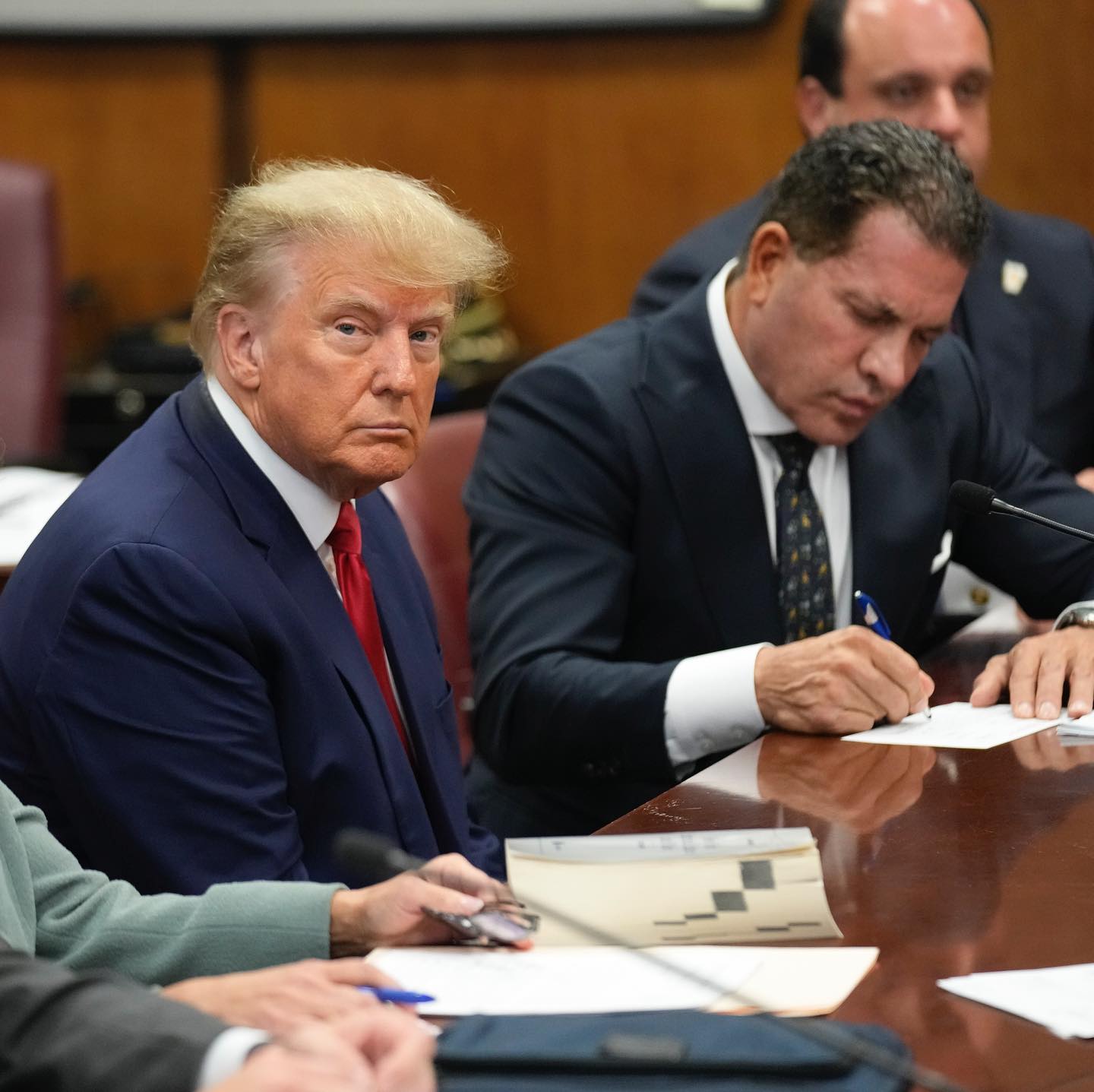
This means that the most tendentious, most obviously political, and weakest criminal case against Trump will be the first to see the inside of a courtroom. This is the case in Manhattan, which District Attorney Alvin Bragg (D) was pressured into bringing by a former employee’s book. It is very clear that this vague bookkeeping charge would never have been brought against anyone except Trump. And given the overwhelmingly Democratic jury pool in this case, he seems unlikely to get a fair trial there. But will it matter electorally?
Democrats currently have two projects in the oven. One is to get their voters so excited about ballot referenda on unrestricted legal abortion in Florida and Arizona that they can carry Biden’s body to victory on a wave of enthusiasm. It remains unclear for now whether this will work in those two states.
The early returns in Florida are not promising for this strategy — abortion ranks as only the fourth-most important issue to voters at 13 percent in a recent survey, after immigration, the economy, and the cost of living, and of course some percentage of abortion-focused voters are pro-life. In fairness, Arizona is the state where the question will be more important.
Still, more broadly, polling taken nationally and in other meaningful presidential states since Arizona’s recent court decision on abortion indicates continued major problems for Biden, as he still trails in polls released last week in Georgia, Michigan, North Carolina, Wisconsin, and Pennsylvania.
Their second project is to make sure Trump gets convicted of something before the election, in hopes that the conviction itself will change voters’ perception of him and put a ding in his image and his numbers.
Biden-perception: Yet as these two issues become more baked into the cake — that is, as Trump’s likelihood of being convicted in Manhattan becomes even more apparent, and as the post-Roe legal landscape becomes normalized for voters — Democrats’ window for making these strategies work keeps narrowing.
Meanwhile, Biden has a separate question to worry about regarding his base. As police stage crackdowns (or attempt to do so) against escalating anti-Israel protests on campuses such as Yale and Columbia, the far left’s antipathy toward Biden on this issue continues to spiral. The “Genocide Joe” moniker, however ridiculous it may be, will resonate with some part of the population, including a significant number of Muslim voters in Michigan.
Moreover, for all the grief he is getting from normal people all across the spectrum on issues such as inflation and the border crisis, Biden can ill afford mass rejection by the professional left-wing activist class, a critical part of the college-educated white component of his base.
Governor 2024
Washington: Former Rep. Dave Reichert (R) is probably still this powerless state party’s best shot at electing a governor this year, and he is probably still the favorite to advance after the August top-two primary. But Reichert found himself forced to withdraw from the official party convention endorsement process on Friday, just before the convention endorsed Benton County Republican Chairman Semi Bird (R). A late effort to prevent the part from making any endorsement failed.
Reichert released a tweet announcing his decision and complaining about the condition of the state’s powerless Republican Party, stating his determination to stay in the race and win anyway.
Bird, meanwhile, was forced to acknowledge in his speech to the convention that he had been convicted of misdemeanor fraud in 1993 for using his father’s name when applying for credit.
Senate 2024
Florida: Sen. Rick Scott (R), always the favorite in this race, holds a massive 16-point lead over his putative Democratic opponent, Rep. Debbie Murcasel-Powell (D), strongly outperforming Trump (who leads by eight among likely voters in a head-to-head) in the poll released last week by Florida Atlantic University.