The Briefing, Vol. XIII, Issue 20
May 19, 2025
This week:
- What’s behind the rebound in Trump’s numbers?
- Will New Jersey Democrats embrace Newark’s arrested mayor?
- Cornyn trails badly in yet another poll
Outlook
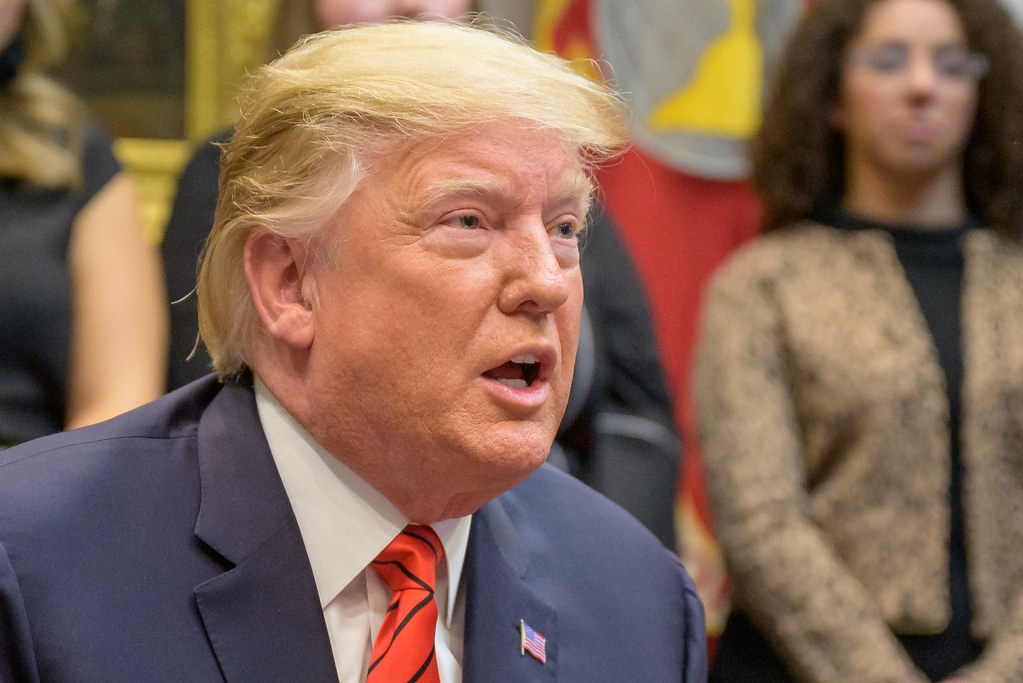
By late April, the aggregate average of president Trump’s approval rating had fallen to minus-seven. Today, it is minus-three, which in Trumpian terms is about as close to a net-positive rating as the current president gets.
In short, the polls are nearly all showing a recovery in Trump’s favor since the “liberation day” excitement of early April. But what is behind this sudden recovery?
The Trump era has forced us all to discard many of the old rules of politics. But some of them endure, and one is this: Presidencies are usually made and broken — in the short run, anyway, which tends to determine political and election outcomes — based on the performance of the economy.
Admittedly, this is an oversimplification. Presidents can also lose the public’s confidence in other ways — for example, with major scandals (Watergate, for example) or a foreign policy disasters (the Afghan withdrawal of 2021 or the Iraq War after 2004). But the public is unlikely to remain angry for a sustained period between elections if not for noticeable economic problems such as inflation, high energy prices, unemployment, a poorly performing stock market, or some combination of the above.
At the moment, the market chaos initially precipitated by Trump’s “liberation day” tariffs has subsided, with stocks recovering all ground lost since April 2 and nearly all of the ground lost since the year began. The job market remains strong based on all available indicators. Inflation is down to its lowest level in four years. Gas prices specifically are down thanks to lower crude oil prices. The feared broad price increases due to tariffs have not materialized.
Step away from the tariffs: In this context, the recovery to Trump’s approval ratings makes sense. But what’s really going on here?
With all the recent attention to Biden’s mental decline and the coverup surrounding it, it bears mention that the people surrounding Biden were not loyal enough to own up to their mistakes and change course, nor to confront him about his mistakes. This may prove different for Trump, who clearly has more agency in his decisions but may also have a more loyal inner circle.
During Biden’s term, no one on his team loved him enough to protect him from his own bad ideas. If they had, he might have been prevented from the inflationary policies he insisted upon early in his administration — first his early stimulus package and then the paradoxically-named “Inflation Reduction Act.” These measures practically set him up to fail, to the point that he was already politically non-viable before Democrats forced him out of the race due to his evident cognitive impairment — something we were already pointing out as early as January 2024.
Trump, meanwhile, has a similar dynamic. He loves tariffs, and tariffs are mutually harmful instruments. But it appears Trump has been talked into using tariffs only for diplomacy purposes (something the U.S. can afford to do as the world’s leading consumer) rather than adopting them long-term as a matter of principle or using them to rectify trade imbalances.
If Trump were to take Biden’s path and double down on his instincts (in his case with tariffs), it could send markets reeling all over again. And that could send his approvals plummeting all over again. It is a reminder, as always, that populace is fickle and opinion ratings are fleeting.
But it already seems like Trump has learned something where Biden did not, and this may be the result of having a team around him that is willing to convince him of what is best for his legacy. As a result, Trump may yet avoid this pitfall and have a second term as economically successful as his first term was before COVID caused a collapse in productivity and supply chains.
Governor 2025
New Jersey: Newark Mayor Ras Baraka’s (D) stunt of getting himself arrested outside an ICE facility on May 9 may yet propel him to the Democratic nomination for governor. But as of May 10, he was still polling behind.
A StimSight Research poll of the June 10 primary, conducted May 7 through 10, had him at 21 percent, ten points behind Rep. Mikie Sherrill (D). Sherrill was at that time viewed by Democratic voters as the most electable, most likely to fight against Trump, and most trustworthy. But will Baraka’s stunt pay off?
Republicans are very likely to nominate former Assemblyman Jack Ciattarelli (R) once again. An important note about this race is that President Trump’s approval rating in New Jersey is even with his disapproval rating, according to Emerson College. Trump has endorsed Ciattarelli, who came very close to winning the governor’s race in 2021. New Jersey is becoming a much more competitive state in the Trump era, and this year’s governor’s race could establish this clearly as fact.
Governor 2026
Iowa: Rep. Randy Feenstra (R), who represents the conservative and Republican northwestern portion of his state, is running to replace the retiring Gov. Kim Reynolds (R). He is already attempting to clear the field with a statewide ad campaign before a crowd of ambitious Republicans gathers to go for the open governorship of a state that has gone solidly Red over the last 12 years.
Democrats are likely to nominate state Auditor Rob Sand (D), who announced his candidacy May 12.
Ohio: After disappearing from Elon Musk’s DOGE efforts, billionaire entrepreneur Vivek Ramaswamy (R) has emerged as the only serious Republican candidate for governor of Ohio. Attorney General Dave Yost has dropped his campaign now that the state Republican Party has officially endorsed the former 2024 presidential candidate.
If successful, Ramaswamy would become the third Indian-American governor after Bobby Jindal and Nikki Haley.
Senate 2026
Florida: The senior army officer who participated in getting Trump impeached the first time has caught the political bug after his brother Eugene’s election to the U.S. House. Alexander Vindman (D) is now talking about running for Senate against the recently appointed Sen. Ashley Moody (R) in Florida.
Vindman might not go over too well in a state that went for Trump by 14 points, but he might still be the best candidate Democrats have available to run. So far, the only Democrat officially in the race is former Rep. Alan Grayson (D), known for his wild antics when in office. Teacher Josh Weil (D), who lost a special U.S. House election earlier this year in Northeast Florida, has also talked about running.
Texas: Yet another poll, this time by Quantus Insights, shows Attorney General Ken Paxton (R) crushing Sen. John Cornyn (R) in a primary, 52 to 39 percent. In a three-way race including Rep. Wesley Hunt (R), who has also hinted at running, Cornyn could at least make a runoff in a 46 to 38 to 16 percent result.