
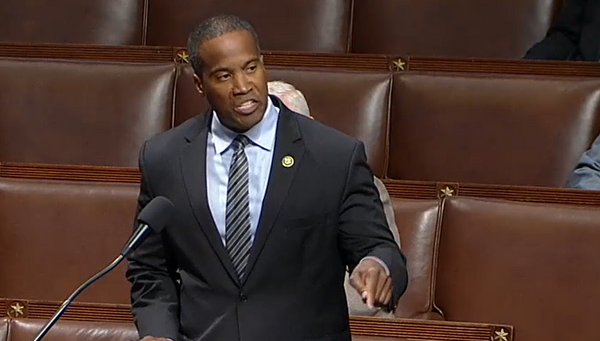
LANSING — Republican gubernatorial candidate John James is facing intensifying backlash from conservatives over his support for federal vehicle “kill switch” mandates, an issue that opponents say is rapidly becoming one of the most politically damaging liabilities of his campaign.
What initially looked like a little-noticed vote in Washington has evolved into a growing grassroots problem for James as conservative activists, Second Amendment supporters, privacy advocates, and anti-surveillance voters increasingly focus attention on technology that could allow vehicles to be remotely disabled.
Critics argue the issue cuts directly against Republican values of personal freedom, privacy, and protection from government overreach.
And increasingly, Republican primary voters appear to agree.
The controversy stems from provisions tied to federal transportation and infrastructure legislation supported by James that critics say opens the door to government-mandated vehicle monitoring systems and potential remote disabling technology in future automobiles.
Opponents have branded the concept a “government kill switch,” warning that such systems could eventually be abused by bureaucrats, hackers, political actors, or law enforcement agencies.
For many conservative voters, the issue has become symbolic of a larger concern: the rapid expansion of government control through technology and artificial intelligence.
Businessman Perry Johnson has aggressively seized on the issue in the Republican primary, warning that AI-controlled systems in vehicles could create dangerous scenarios for ordinary citizens.
Johnson allies have argued that Americans should never have to worry about whether their vehicle could suddenly be disabled during an emergency, a violent confrontation, or a politically motivated abuse of power.
The issue appears especially potent among Michigan Republicans because of the state’s deep ties to the auto industry and strong car culture.
Michigan voters understand automobiles better than almost anyone in America. Many conservatives view the idea of federally influenced vehicle monitoring technology as not merely intrusive, but fundamentally un-American.
James’ critics say the congressman badly underestimated the political fallout.
The issue has become even more problematic as James simultaneously faces criticism for avoiding debates and limiting unscripted interactions with conservative grassroots audiences. Activists increasingly accuse him of trying to avoid defending controversial positions in front of Republican primary voters.
Several county GOP activists have privately described James’ campaign as overly cautious and disconnected from the base, particularly compared to outsider candidates traveling the state holding town halls, debates, and grassroots events.
Meanwhile, Democrats appear content to watch the Republican infighting unfold.
Democratic gubernatorial candidate Jocelyn Benson recently mocked James as a struggling candidate “trying to manufacture political theater” while “struggling to connect with voters who have already rejected him twice.”
That statement reflected a growing perception among political insiders that James’ vulnerabilities are multiplying faster than his campaign can contain them.
The kill switch controversy may be the clearest example yet.
For many Republican voters, the issue is simple: they do not want Washington, bureaucrats, artificial intelligence systems, or politically connected tech companies possessing the ability to interfere with their vehicles.
And now, John James is increasingly finding himself defined by exactly that fear.