

With Joe Biden tossed aside, and Kamala Harris the likely Democrat nominee for President despite not receiving any votes in either the 2020 or 2024 primary, speculation has run wild over who she will pick for VP.
Here are the top 10 most likely choices! (Biographies via Wikipedia)

10. California Gov. Gavin Newsom
“Newsom graduated from Santa Clara University in 1989. Afterward, he founded the boutique winery PlumpJack Group with billionaire heir and family friend Gordon Getty as an investor. The company grew to manage 23 businesses, including wineries, restaurants, and hotels. Newsom began his political career in 1996, when San Francisco mayor Willie Brown appointed him to the city’s Parking and Traffic Commission.[1] Brown then appointed Newsom to fill a vacancy on the Board of Supervisors the next year and Newsom was first elected to the board in 1998.
Newsom was elected mayor of San Francisco in 2003 and reelected in 2007. He was elected lieutenant governor of California in 2010. As lieutenant governor, Newsom hosted The Gavin Newsom Show from 2012 to 2013. He also wrote the 2013 book Citizenville, which focused on using digital tools for democratic change. He was reelected in 2014. Newsom was elected governor of California in 2018.
During his governorship, Newsom faced some criticism for his personal behavior and leadership during the COVID-19 pandemic. He defeated an attempt to recall him from office in 2021 and was reelected the next year with more than 59% of the vote.”

9. Wisconsin Gov. Tony Evers
“Born and raised in Plymouth, Wisconsin, Evers was educated at the University of Wisconsin–Madison, eventually receiving a Ph.D. After working as a teacher for several years, he became a school administrator, serving as a principal, until he assumed the office of district superintendent. Evers first ran for Superintendent of Public Instruction in 1993 and again in 2001, losing both elections. Evers was instead appointed deputy superintendent, a position he served in from 2001 to 2009. In 2009, he ran for Superintendent of Public Instruction again, this time winning. He was reelected twice, in 2013 and 2017.
On August 23, 2017, Evers announced his candidacy for governor of Wisconsin, challenging two-term Republican incumbent Scott Walker. Walker was seen as a vulnerable incumbent and had been criticized for his education policies. Evers won the Democratic primary in August 2018. Former state representative Mandela Barnes won the primary for the lieutenant governorship, becoming Evers’s running mate. The pair narrowly defeated the Scott Walker-Rebecca Kleefisch ticket in the 2018 election by a margin of 1.1%. Evers was reelected by a larger margin of 3.4% in 2022.[4]
Evers is known for his frequent use of his veto power, which is significantly greater for Wisconsin governors than for those of other U.S. states, due to his opposition to the vast majority of the Republican-controlled Wisconsin Legislature‘s agenda.[5] He has used his veto power more frequently than any governor in Wisconsin history, and has used line-item veto power to rewrite Republican-authored bills.”
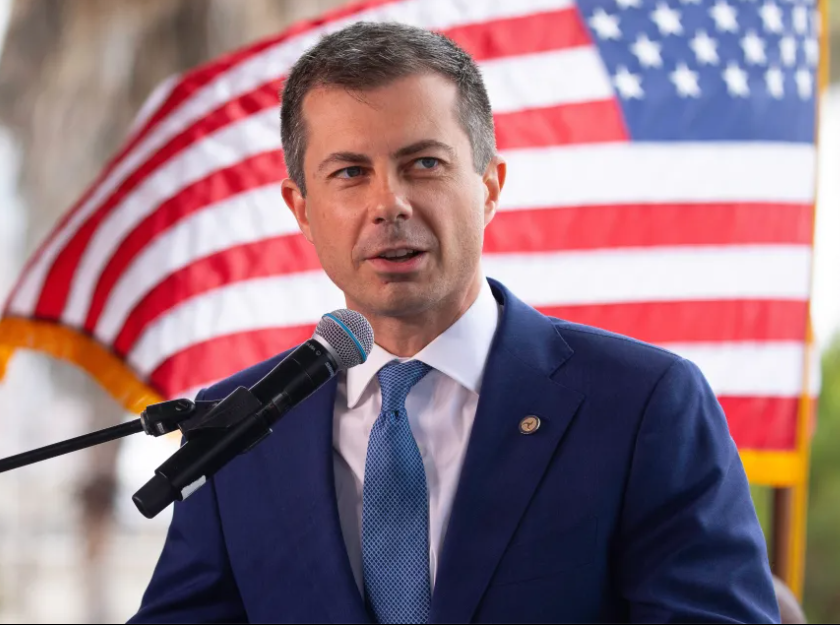
8. Transportation Secretary Pete Buttigieg
“Buttigieg is a graduate of Harvard College and the University of Oxford, attending the latter on a Rhodes Scholarship. In 2007, he began three years of work at the management consulting firm McKinsey & Company. From 2009 to 2017, he was an intelligence officer in the United States Navy Reserve, attaining the rank of lieutenant. He was mobilized and deployed to the War in Afghanistan for seven months in 2014. Before being elected as mayor of South Bend in 2011, Buttigieg worked on the political campaigns of Democrats Jill Long Thompson, Joe Donnelly, and John Kerry, and ran unsuccessfully as the Democratic nominee for Indiana state treasurer in 2010. While serving as South Bend’s mayor, Buttigieg came out as gay in 2015. He married Chasten Glezman, a schoolteacher and writer, in June 2018. Buttigieg declined to seek a third term as mayor.
Buttigieg ran in the 2020 Democratic Party presidential primaries, launching his campaign for the 2020 presidential election on April 14, 2019. He became one of the first openly gay men to launch a major party presidential campaign.[b] Despite initially low expectations, he gained significant momentum in mid-2019 when he participated in several town hall meetings and television debates. Buttigieg narrowly won the Iowa caucuses and placed a close second in the New Hampshire primary.[4][5][6] By winning Iowa, he became the first openly gay candidate to win a presidential primary or caucus. Buttigieg dropped out of the race on March 1, 2020 and endorsed Joe Biden the following day.
President-elect Biden named Buttigieg as his nominee for secretary of transportation in December 2020. His nomination was confirmed on February 2, 2021, by a vote of 86–13, making him the first openly gay Cabinet secretary in U.S. history.[c] Nominated at age 38, he is also the youngest Cabinet member in the Biden administration and the youngest person ever to serve as secretary of transportation.”

7. Illinois Gov. JB Pritzker
“Pritzker is a member of the wealthy Pritzker family that owns the Hyatt hotel chain.[2] As a businessman, he has started several venture capital and investment startups, including the Pritzker Group, where he is managing partner.[3][4]
He has been a longtime financial supporter and active member of the Democratic Party.[5] He became the Democratic nominee for governor of Illinois in the 2018 gubernatorial election after winning a crowded primary election. He defeated Republican incumbent Bruce Rauner in the general election on November 6, 2018, and took office on January 14, 2019.[1] Pritzker was reelected on November 8, 2022.”
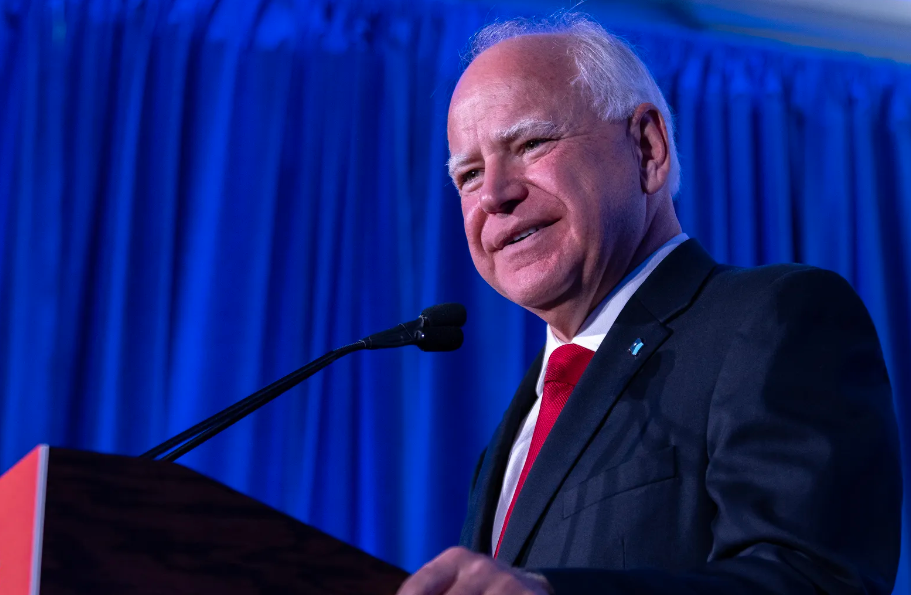
6. Minnesota Gov. Tim Walz
“Born in West Point, Nebraska, Walz was a member of the Army National Guard, and worked in agriculture, manufacturing, and teaching after high school.[3] He later graduated from Chadron State College and Minnesota State University, Mankato. He moved to Minnesota in 1996. Before running for Congress in 2006, he served for 24 years in the Army National Guard and as a social studies teacher in the Mankato school district.[4] He was elected to the United States House of Representatives for Minnesota’s 1st congressional district in 2006, defeating six-term Republican incumbent Gil Gutknecht. He was reelected five times, retiring in 2019 after being elected governor. Walz represented a large, mostly rural section of southern Minnesota situated along the border with Iowa.
On November 6, 2018, Walz was elected governor, defeating the Republican nominee, Hennepin County Commissioner Jeff Johnson.[5] Walz was reelected in the 2022 Minnesota gubernatorial election, defeating Republican nominee Scott Jensen.”
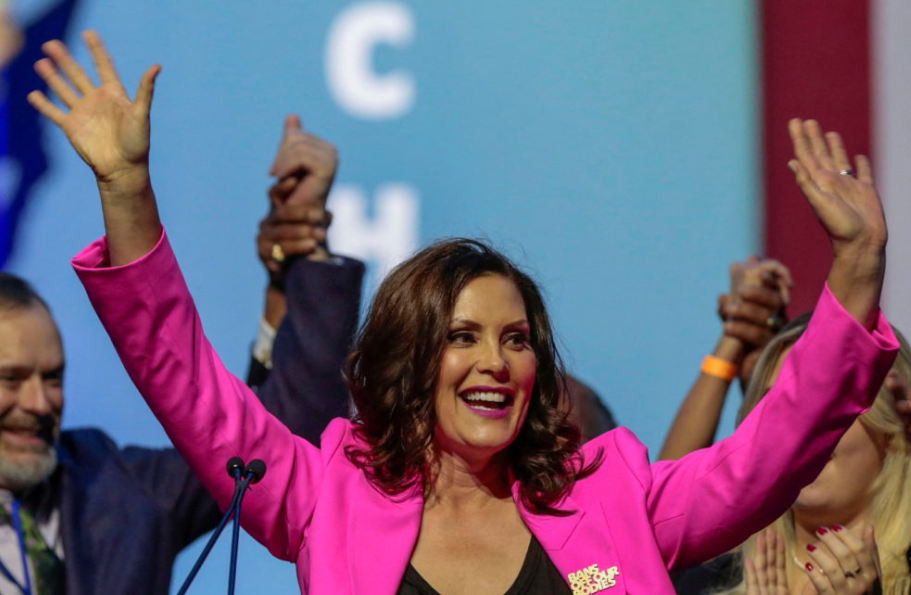
5. Michigan Gov. Gretchen Whitmer
“Whitmer was born and raised in Michigan. She graduated from Forest Hills Central High School, Michigan State University, and the Detroit College of Law. Her political career began in 2000 when she was elected to the Michigan House of Representatives. In 2006, she won a special election to the state senate, serving in that chamber until 2015, and became its first female Democratic leader from 2011 to 2015. In 2013, Whitmer gained national attention for a floor speech during a debate on abortion in which she shared her experience of being sexually assaulted. For six months in 2016, she was the prosecutor for Ingham County. Whitmer was elected governor in 2018, defeating Republican nominee Bill Schuette, the state attorney general.
Whitmer has identified herself as a progressive. As governor, she has focused on healthcare and infrastructure legislation. In February 2020, she was selected to give the Democratic response to then President Donald Trump‘s 2020 State of the Union Address. Since January 2021, Whitmer has served as one of the vice chairs of the Democratic National Committee. She was reelected as governor in 2022, defeating Republican nominee Tudor Dixon.”

4.Kentucky Gov. Andy Beshear
“Andrew Beshear is an American attorney and politician serving since 2019 as the 63rd governor of Kentucky. A member of the Democratic Party, he served as the 50th attorney general of Kentucky from 2016 to 2019.[1]
As attorney general, Beshear sued Governor Matt Bevin several times over issues such as pensions, and defeated Bevin by just over 5,000 votes in the 2019 gubernatorial election. Beshear was reelected to a second term in 2023 by a wider margin of 5%.[2] As of 2024, he and Lieutenant Governor Jacqueline Coleman are the only Democratic statewide elected officials in Kentucky.”

3. North Carolina Gov. Roy Cooper
“Cooper graduated from the University of North Carolina at Chapel Hill in 1979. He began his career as a lawyer and in 1986 was elected to represent the 72nd district in the North Carolina House of Representatives. In 1991, he was appointed a member of the North Carolina Senate, a position he held until 2001. He was elected North Carolina Attorney General in 2000 and reelected in 2004, 2008, and 2012, serving just under 16 years, the second-longest tenure for an attorney general in the state’s history.
Cooper defeated Republican incumbent Pat McCrory for the governorship in a close race in the 2016 election.[3] This election made Cooper the first challenger to defeat a sitting governor in the state’s history. Cooper was reelected in 2020 against Republican nominee, and his Lieutenant Governor, Dan Forest.[4] The Republican-dominated legislature passed bills in a special session to reduce the power of the governor’s office before he took office, but Cooper continued to emphasize increases in education and healthcare funding throughout his tenure, culminating in successful negotiations of statewide Medicaid expansion.”

2. Pennsylvania Gov. Josh Shapiro
“Raised in Montgomery County, Shapiro studied political science at the University of Rochester and earned his Juris Doctor degree from Georgetown University. After that he worked as a senior adviser to Senator Robert Torricelli. Shapiro was elected to the Pennsylvania House of Representatives in 2004, defeating former Republican U.S. representative Jon D. Fox. He represented the 153rd district from 2005 to 2012. Shapiro was elected to the Montgomery County Board of Commissioners in 2011, marking the first time Republicans lost control of Montgomery County. Serving on the board from 2011 to 2017, he held the position of chairman, and in 2015 was also appointed chairman of the Pennsylvania Commission on Crime and Delinquency by Governor Tom Wolf.
Shapiro ran for Pennsylvania attorney general in 2016, defeating Republican John Rafferty Jr., and was reelected in 2020. As attorney general, he released the findings of a statewide grand jury report that revealed the abuse of children by priests and coverup by church leaders; he also helped negotiate $1 billion for Pennsylvania as part of a national opioid settlement.
Shapiro ran for governor of Pennsylvania in the 2022 election. He ran unopposed in the Democratic primary and defeated Republican nominee Doug Mastriano in the general election by a 14.8 percent margin.”

1. Arizona Senator Mark Kelly
“Kelly flew combat missions during the Gulf War as a naval aviator before being selected as a NASA Space Shuttle pilot in 1996. He flew his first space mission in 2001 as pilot of STS-108, piloted STS-121 in 2006, and commanded STS-124 in 2008 and STS-134 in 2011, the final mission of Space Shuttle Endeavour.[3] His identical twin, Scott Kelly, is also a retired astronaut; they are the only siblings to have both traveled into orbit.[4][5]
Kelly’s wife, then-Arizona Congresswoman Gabby Giffords, was shot and nearly killed in an assassination attempt on January 8, 2011.[6][7] Six people died in the Tucson shooting. After the Sandy Hook Elementary School shooting the following year, Giffords and Kelly founded the nonprofit Americans for Responsible Solutions, later renamed Giffords, which campaigns for gun control measures like universal background checks and red flag laws.[8][9][10][11]
Kelly announced his candidacy for Arizona’s Class 3 U.S. Senate seat in the 2020 special election on February 12, 2019. He won the Democratic primary on August 4, 2020, and defeated incumbent Republican Martha McSally in the November 3, 2020, general election, becoming the first Democrat to win this seat since 1962. Kelly was sworn in on December 2, 2020. In 2022, he was elected to a full term in office, defeating Republican challenger Blake Masters. Kelly will become the senior senator from Arizona in January 2025, when Kyrsten Sinema leaves the Senate.”