The Briefing, Vol. XII, Issue 28
This week:
- Democrats still panicking over Biden
- Trump opens up a lead in Pennsylvania
- All three of Trump’s remaining criminal trials effectively pushed past Election Day
President 2024
Biden campaign: Joe Biden is in the political fight of his life against his own party, but he is not giving up. Or so he says.
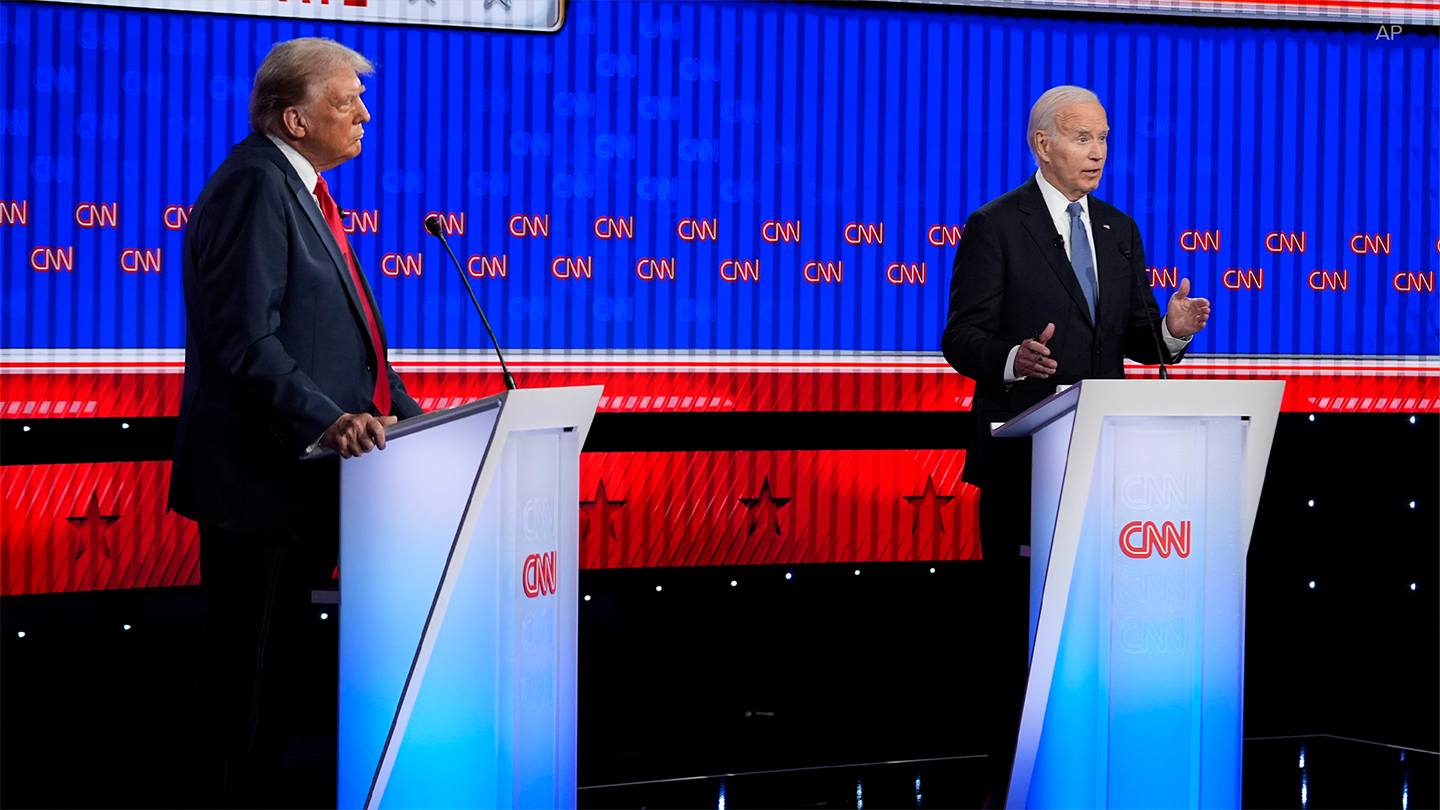
After his disastrous June 27 debate performance, he is clearly fighting to stay in the race for president and to stay relevant. His campaign is spending aggressively and sending him into battleground states in a flurry of campaign appearances.
Biden also conducted a Friday night interview with George Stephanopoulos. Unfortunately for him, the interview only inspired further panic in some corners of the Democratic bubble-world. This includes four senior House Democrats who serve as ranking members on important committees. Reps. Jerrod Nadler (D-N.Y.), Mark Takano (D-Calif.), Joe Morelle (D-N.Y.), and Adam Smith (D-Wash.) all called for Biden to step aside during a private and deliberately leaked phone call with House Democratic Leader Hakeem Jeffries (D-N.Y.). They came forward after five other House Democrats had already called on Biden to step aside.
The reason underlying all this panic is clear: Puck released a memo from Democratic pollster Open Labs purporting to reflect national and state-level survey results.
Among other things, the survey found that Biden supporters are now almost evenly divided (45 percent to 40 percent) on whether Biden should stay in the race, and Biden trails Trump in a multi-candidate race by nearly 10 points.
The Harris gambit: Meanwhile, some of Biden’s allies have made clear that Vice President Kamala Harris would be an acceptable substitute for Biden if necessary. Some have interpreted that as one more sign of trouble for Biden, that anyone is even talking about a replacement candidate. However, we view this as a tactical argument, intended to protect Biden rather than promote Harris.
Democrats understand how much weaker Harris is than Biden and do not actually want her to be the nominee. Thus, the mention of her as the only viable alternative helps Biden by insulating him against the racially controversial choice of anyone but Harris.
We continue to believe that the chances some other Democrat steps in are nil, and the chances that Harris steps in are very low. The difference, in business terms, is that only Harris would have access to the money raised for her and Biden as a ticket. Anyone else would have to do all of his or her own fundraising work from scratch, hire an entirely new campaign staff, and campaign on a timeline so compressed as to be completely unrealistic. Harris would only have to do one or two of those things.
But Harris is no political genius. She flamed out during the 2020 primaries after famously calling Biden a racist on national television (you can watch her say it and safely ignore the fact-checker sites that cover for her) and then being gutted by Tulsi Gabbard in the 60 most satisfying seconds of television in U.S. political history. If she were to replace Biden, she would have resources, but she would need to gain an incredible amount of political talent overnight, and that is the least likely thing to happen of all.
Biden Electoral College collapse: The most alarming part of the Open Labs memo for Democrats is its report on state-level polling over the 72 hours after the debate. This requires a closer look.
Details about this polling — number of respondents, margins of error, etc. — are not presented, which should raise red flags. But the memo is drawn up to suggest that Biden was already losing most of these important states before the debate (as we have maintained all along), and that he fell even further behind by a more-or-less uniform two points in every state surveyed.
According to the memo, he now trails by nine or ten points in Nevada, Arizona, Georgia, and North Carolina. This is not inconsistent with our observations. But the memo goes on to say Biden has lost further ground and now trails in Pennsylvania by 7 points, in Michigan by 7 points, in Nebraska’s 2nd Congressional District by 4 points, and in Wisconsin by 2 points. Further, the poll has Biden trailing in New Hampshire (by 3 points), Virginia (by less than a point) and New Mexico (by half a point). Biden is supposed to be leading by less than a point in Maine and Minnesota, and by just two points in Colorado.
All polling is subject to uncertainty and imprecision, but we believe the Open Labs memo’s dire warnings to Democrats should especially be taken with a grain of salt. Remember, pollsters have ways of making their numbers look better or worse as the occasion demands, and these numbers turned up without much documentation about how they were obtained. Most importantly, this memo was specifically cooked up by Democratic pollsters to inspire an anti-Biden panic among Democrats. It is propaganda, only aimed at a niche audience with a very specific goal in mind.
The suggestion that state-level results have Biden losing even in New Mexico or on the verge of losing Colorado could be accurate. But they should be viewed with skepticism until further evidence emerges as confirmation.
With respect to New Mexico in particular, we consider it a potential battleground state whose status has largely gone unexamined. However, Biden led by 7 points in the most recent fully published poll of the state, even if that was taken pre-debate and conducted by a Democratic firm.
Other polling: On the other side of this coin, a newly released set of new state-level polls from Bloomberg suggests that Biden’s numbers have improved in some places since the debate. Moreover, they suggest that Trump is doing much better in Pennsylvania (where he leads by 7) than in Georgia or North Carolina. These findings are dubious and should probably be taken with some skepticism. It is not that such polls are necessarily manipulated, but rather, they need to be averaged out with other surveys and may not necessarily reflect reality in isolation. It is one thing for Biden to lead in any of those states, but for him to improve by so much after such a debate disaster, as top Democrats question his competency, especially in states where he was furthest behind?
Pennsylvania: Even so, there is one common thread to all of the recent polling.
We have been pointing out for weeks that Biden, even before the debate, was on his way to a decisive Electoral College defeat, albeit not a landslide. Donald Trump held clear leads in enough states and jurisdictions to command 268 electoral votes, leaving him just one shy of an Electoral College tie and a second presidential term.
One thing all the polls (including the Bloomberg polls, the Open Labs memo, and new a set of state polls from a Republican firm) have in common is that they give Trump a surprisingly large lead in Pennsylvania, which he only just narrowly lost in 2020. After several weeks of this consistent trend, we can no longer justify leaving the Keystone State blank as if it had no clear lean. This week’s map has been updated to reflect this reality:

For the moment, then, Trump holds clear (although in some cases small) leads in enough states to win a decisive Electoral College majority of between 287 and 347 electoral votes. At both ends of that range, Trump wins.
This map illustrates just how dire Biden’s situation really is. He has to pull at least one of these red- or pink-colored states back out of Trump’s column to win a second term. And if Democrats try to change horses in midstream, we believe things could get worse for them at all levels of the ballot.
Trump trials: The Supreme Court punted most of the details back to lower courts in its way overhyped but in reality very limited ruling about precisely what offenses a former president can be indicted and tried for, and what evidence can be used at trial.
The one guaranteed result, and probably the only one that matters politically, is that none of Trump’s other criminal trials — two of which (at the federal level) are more serious in nature than the political prosecution cooked up and completed already in New York — will take place before the election. If Trump wins, he will likely pardon himself in the two federal trials pending in Washington and Florida. In New York, he will have to win on appeal. The Georgia trial might never take place.
But this isn’t the best part for Trump. The best part is that, as the New York Times puts it this morning, “Biden’s strategy to make the race about Trump is suddenly in doubt.” That’s quite an understatement.
Senate 2024
Montana: In the second-most-likely state (after West Virginia) to flip from Democrat to Republican in the U.S. Senate, the GOP nominee, Tim Sheehy, leads by 7 points, but that’s according to a poll by a SuperPAC that supports him.
Sen. Jon Tester (D), who has survived multiple close races, is probably facing his most difficult challenge yet, going up for re-election in a Trump presidential year in a state where Trump performs especially well with the state’s typically left-wing labor voters.